
Product counterfeiting remains a serious issue in Indonesia. It frequently affects everyday products such as medicines, skincare, cosmetics, printer ink, and other consumer goods. To address this problem, many brand owners rely on hologram stickers as a sign of authenticity. As technology evolves, standard QR codes have also emerged as an alternative. More recently, advanced solutions like GoValid’s Anti-Counterfeit system have been introduced. But how effective are these methods in truly protecting products from counterfeiting? Let us explore the differences.
1. Hologram Stickers
Hologram stickers are security labels that use optical technology to create three-dimensional (3D) images or visual effects that change when viewed from different angles.
The use of holograms as anti-counterfeit seals became popular in the early 2000s. At the time, holograms were considered difficult to copy due to their complex and distinctive designs, and they could not be reproduced using conventional photocopying methods.
However, with today’s advanced printing technology, holograms have a major weakness. Counterfeiters are now able to replicate holograms with up to 95–99% visual similarity. When applied to counterfeit products, most consumers cannot distinguish between genuine and fake holograms.
More importantly, holograms are static. There is no way for consumers to verify their authenticity digitally. Once a hologram design is successfully copied, there is no system in place to detect or signal that counterfeiting is occurring.
2. Standard QR Codes
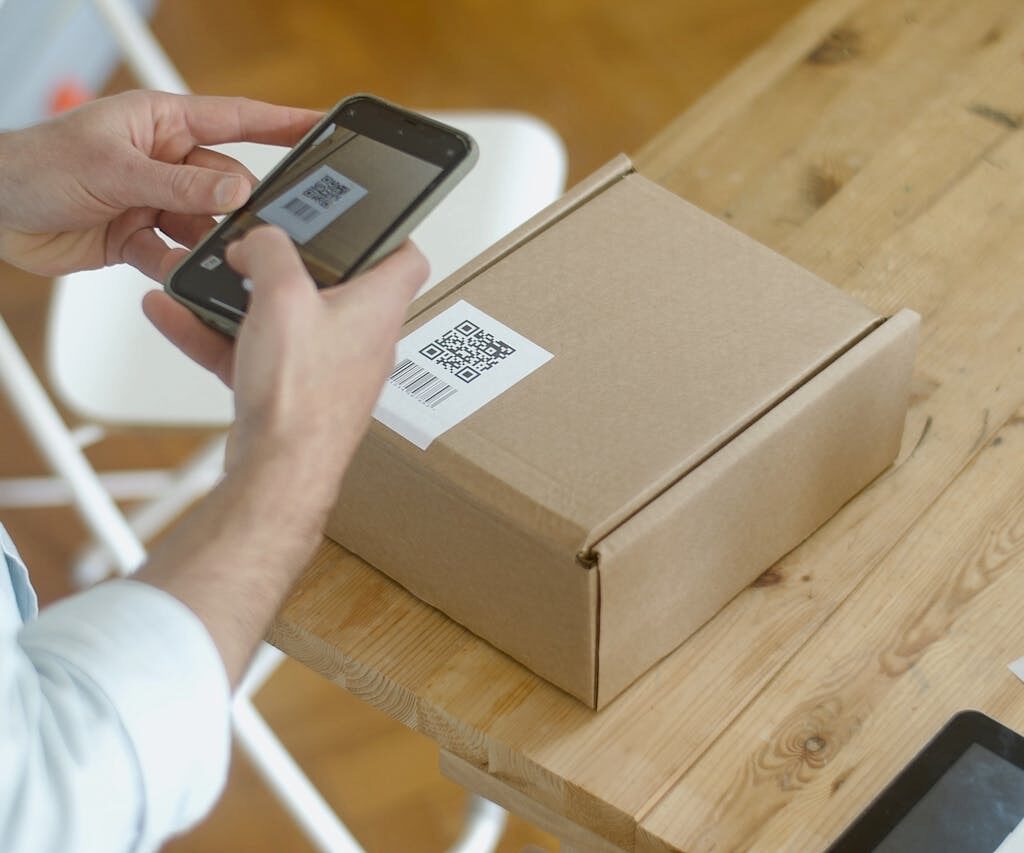
In the 2010s, QR codes (Quick Response Codes) became widely adopted as authenticity markers, driven by the availability of built-in scanning features on smartphones. A QR code is a two-dimensional matrix code capable of storing alphanumeric data, which can be instantly read by scanning devices.
In practice, many brands print the same QR code on all product packaging. When scanned, the code usually redirects consumers to the official brand website or displays a simple message such as “original product.” This approach offers a perceived improvement in authenticity assurance.
However, standard QR codes also have significant limitations. They are extremely easy to duplicate. Counterfeiters can simply photograph a QR code and print it on thousands of fake products. As a result, every scan still leads to the legitimate website, giving consumers a false sense of authenticity.
Crucially, standard QR codes do not have any mechanism to detect misuse. Neither consumers nor brand owners receive any warning when counterfeiting occurs, allowing fake products to circulate unnoticed.
3. GoValid Anti-Counterfeit System
GoValid addresses the weaknesses of both holograms and standard QR codes through its Anti-Counterfeit system. Rather than merely validating a product, GoValid actively monitors and detects QR code misuse in real time.
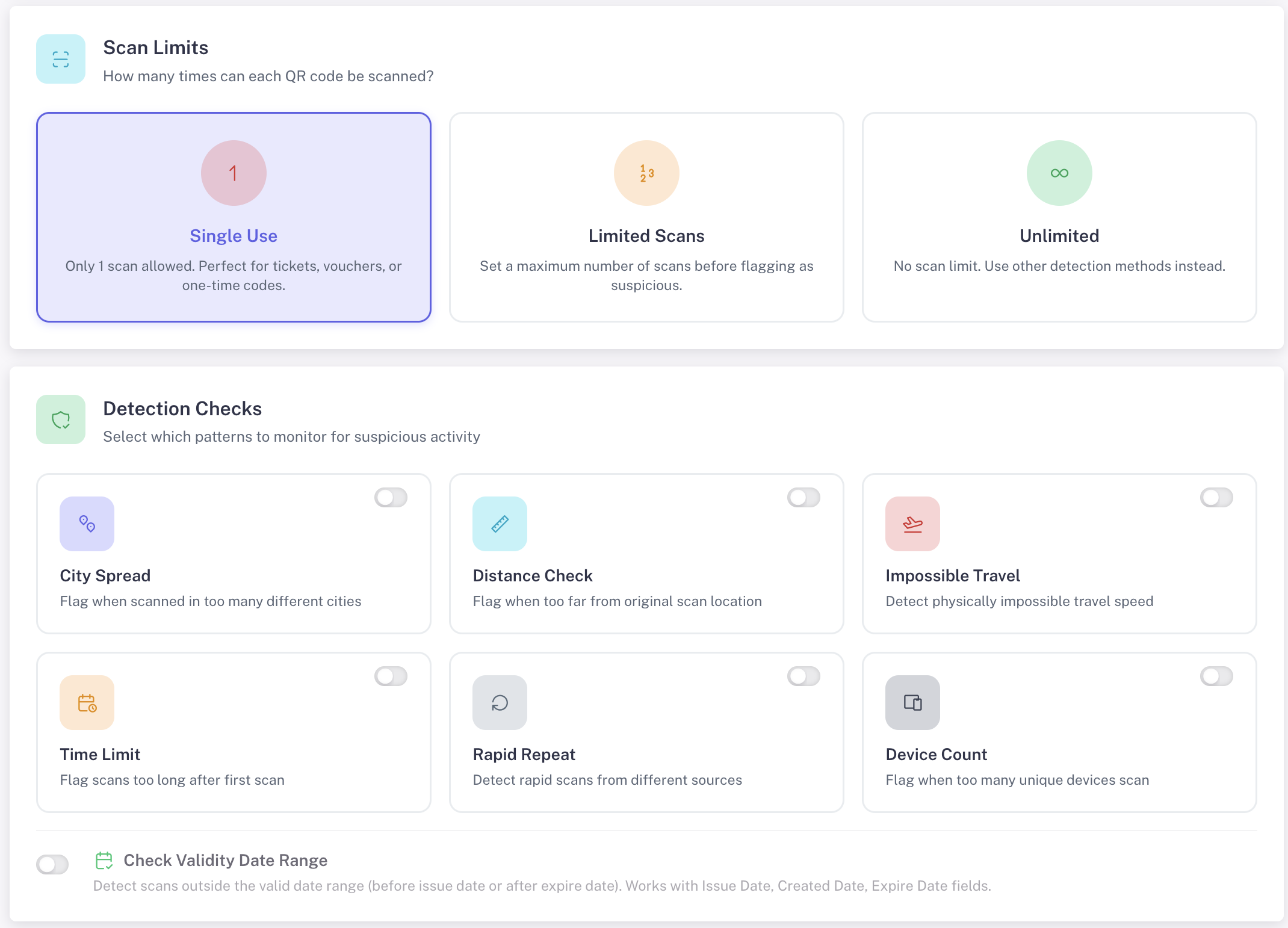
The system analyses scanning patterns using multiple parameters, including scan frequency, location, time, device characteristics, and IP address. This allows brands to:
- Detect QR codes that have been copied and reused on counterfeit products
- Identify scans from abnormal or geographically impossible locations
- Monitor excessive scans from multiple devices
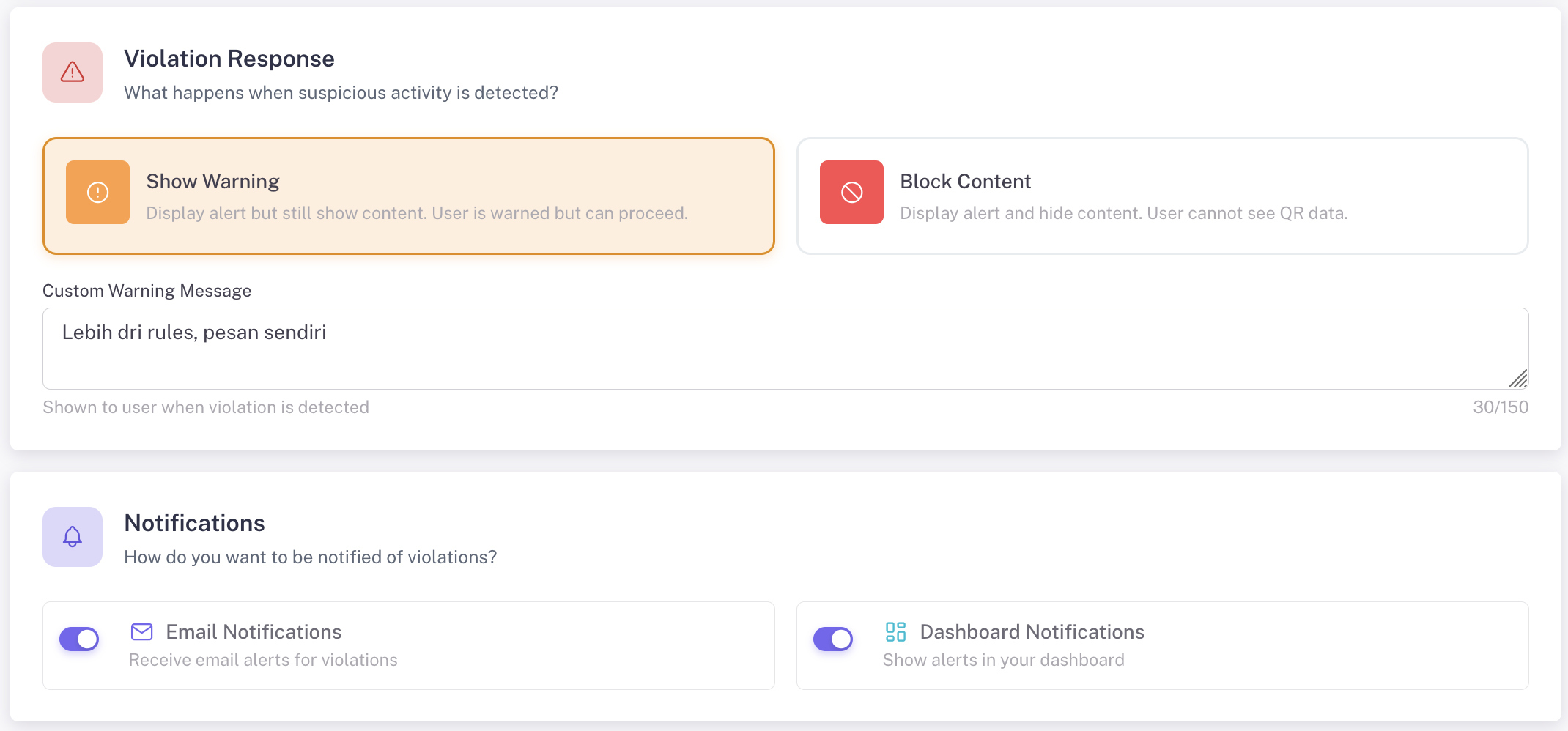
- Receive real-time alerts via the GoValid dashboard and email
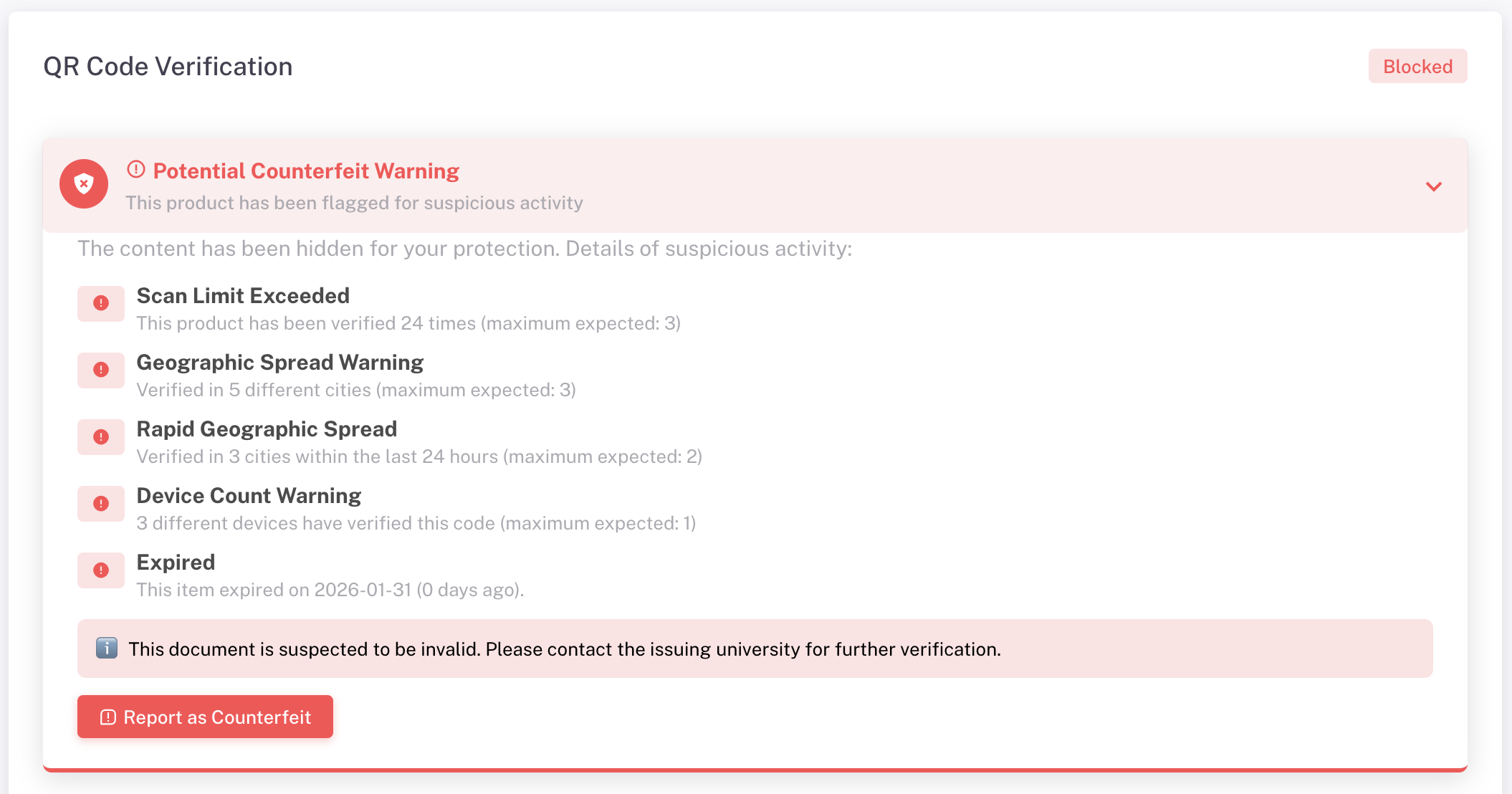
Consumers also benefit directly from this system. When a counterfeit product is scanned, the verification page can display a warning message such as “Product suspected to be counterfeit.” This helps protect consumers from potentially harmful products, especially in sensitive categories like medicines, skincare, and cosmetics.
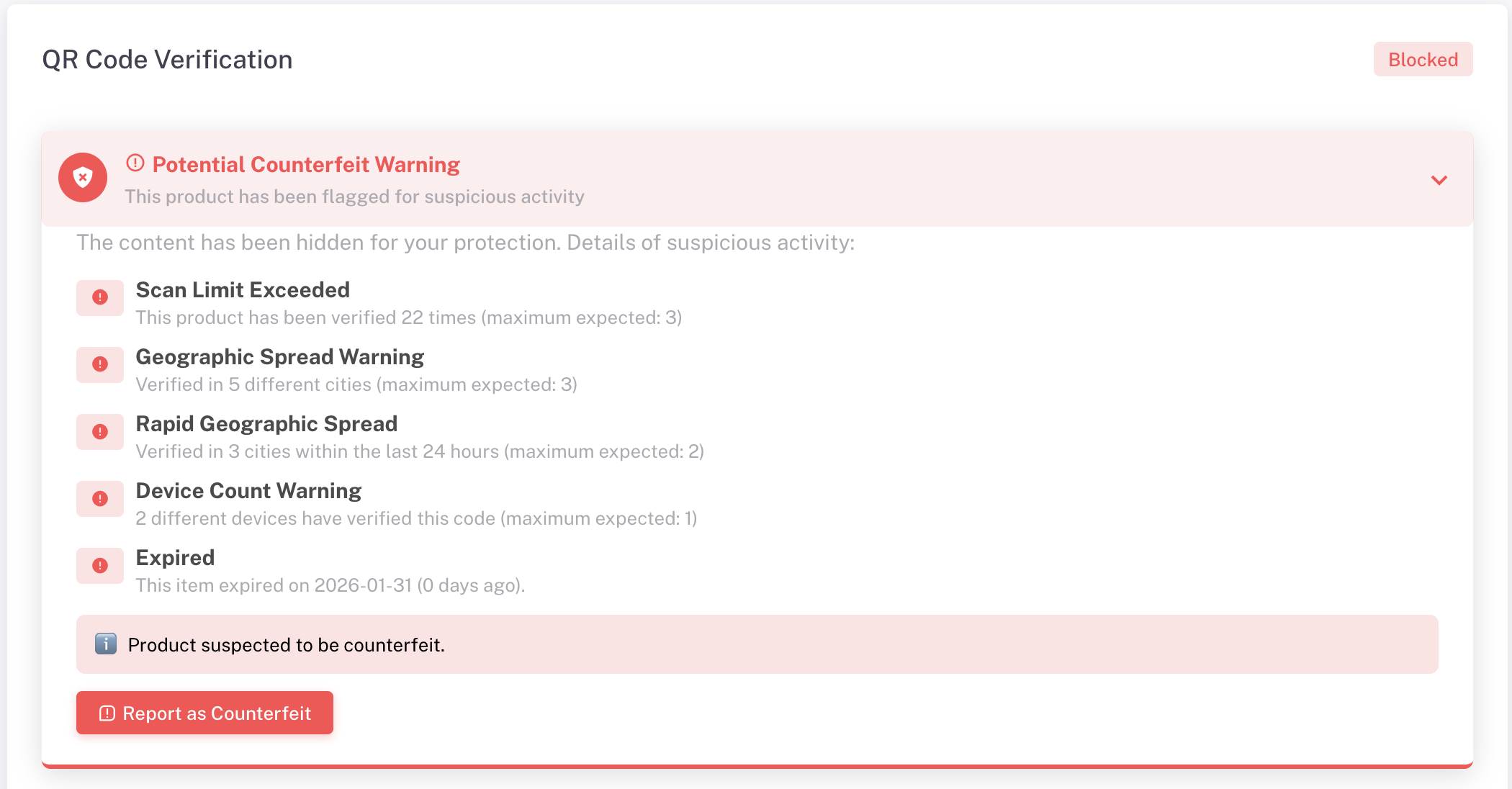
To illustrate, imagine you launch a facial serum, with each package assigned a unique QR code that is allowed to be scanned only once. If counterfeiters replicate the packaging and reuse the same QR code, the system will immediately detect multiple scans for a single code. The verification page will then display a warning message to the consumer, clearly indicating that the product may be counterfeit.
So, Which Solution Is the Most Effective?
Hologram stickers, standard QR codes, and GoValid’s Anti-Counterfeit system all serve as authenticity markers, but their effectiveness differs significantly. Among the three, GoValid is the only solution that actively protects against counterfeiting rather than merely providing visual deterrence.
With GoValid, each product is assigned a unique digital identity through a monitored QR code. The system does not simply verify authenticity—it continuously detects misuse and enables immediate response before counterfeit products cause greater harm.
It Is Time to Move Toward Sustainable Anti-Counterfeiting Protection
Counterfeiting can no longer be addressed with visual security measures alone. While holograms and standard QR codes still have limited roles, they were not designed to confront modern, organised, and data-driven counterfeiting practices.
With GoValid’s Anti-Counterfeit system, brands gain active, adaptive, and data-based protection tailored to their products. If you aim to protect your products while maintaining customer trust, now is the right time to adopt GoValid’s Anti-Counterfeit solution.









Comments are closed.